Whether at work or play, always look out for power lines.
Electricity can “jump” from power lines, so getting yourself or equipment too close to power lines can cause property damage, serious injury, or death. Read on for information about staying safe around power lines.
We’re here to help. Get in touch if you need help. Or, check out our FAQs.
Working near power lines
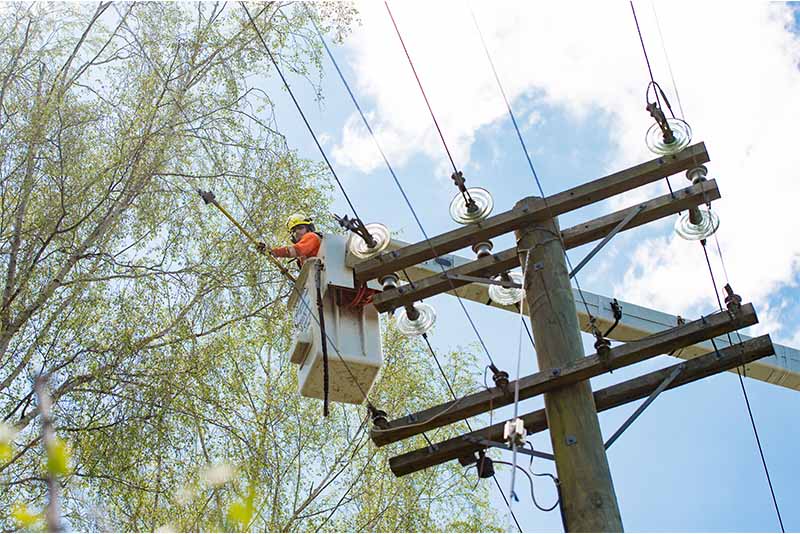
If you are working around power lines, you will need to follow several key rules in the New Zealand Electrical Code of Practice for Electrical Safe Distances (NZECP 34:2001). Two of these rules are listed below.
5.2.1 The distance between any live overhead electric line and any part of any mobile plant or load carried shall be “AT LEAST 4.0 METRES”, unless the operator has received written consent from the overhead electric line owner allowing a reduced distance.
5.3.1 Mobile plant or any load carried shall not operate above the conductors of any overhead electric line unless the operator has received written consent from the overhead electric line owner to work above the overhead electric line.
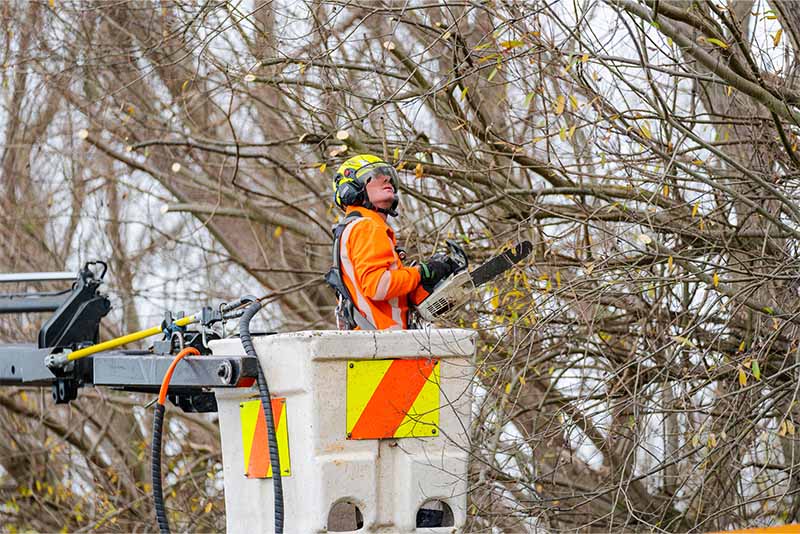
Working near underground cables
Knowing where underground cables are located is essential for staying safe and preventing damage to the network. Click here to learn more about working near underground cables.
Applying for a close approach consent or a high load consent
Accidents involving electricity

Vehicle or mobile plant accidents involving electricity
If you are outside the vehicle:
- Stay clear of power lines (at least 10 metres).
- Warn others of the danger.
- Call 111 for assistance.
If you are inside the vehicle:
- If you can do so safely, carefully drive to a safe distance from all electrical hazards before exiting the vehicle.
- Call 111 for assistance.
- The safest thing you can do is stay in your vehicle until emergency crews arrive to assist you.
- If the vehicle cannot move for any reason and you need to exit the vehicle because of a life-threatening danger (such as fire), jump as far away as you can, keeping both feet together when you land. Continue to jump until you reach safety. Watch this video to see a demonstration of what to do in this situation.
Aircraft safety – wire strike
Any aircraft flying at low altitude is at risk of a wire strike, but helicopters are especially susceptible due to the nature of the work they do. Wire strike is preventable, but only with a well-planned safety programme to identify hazards and put mitigations in place. For more information on wire strike, visit the Civil Aviation Authority (CAA) website.
Boating safety
Boat operators should always be aware of power lines and cables while on the water and at boat ramps. Always remember to:
- look for signs that show the location of underwater cables before dropping anchor
- remain vigilant for overhead power lines if your boat has a mast
- lower your mast at the boat ramp before heading home.
How can we help you work safely around electricity?
I am working near power lines
Safety isolations for non-prescribed electrical work (such as tree trimming, or painting around conductor insulators on bargeboard) are at no charge. Safety isolations for prescribed electrical work (such as a meter change, or distribution board main breaker replacement) will incur a charge.
I am moving a high load near power lines
I am digging/trenching
I am worried that trees or other vegetation on my property are growing too close to power lines
Request a free inspection and quote from trained MainPower Utility Arborists, or call 0800 30 90 80 for advice.
Report a safety concern
In an emergency, call 111. If you see damage to electricity equipment, please call MainPower immediately on 0800 30 90 80 to report it.
We’re here to help
If you need some assistance or advice, please get in touch with our team.
